Beauty
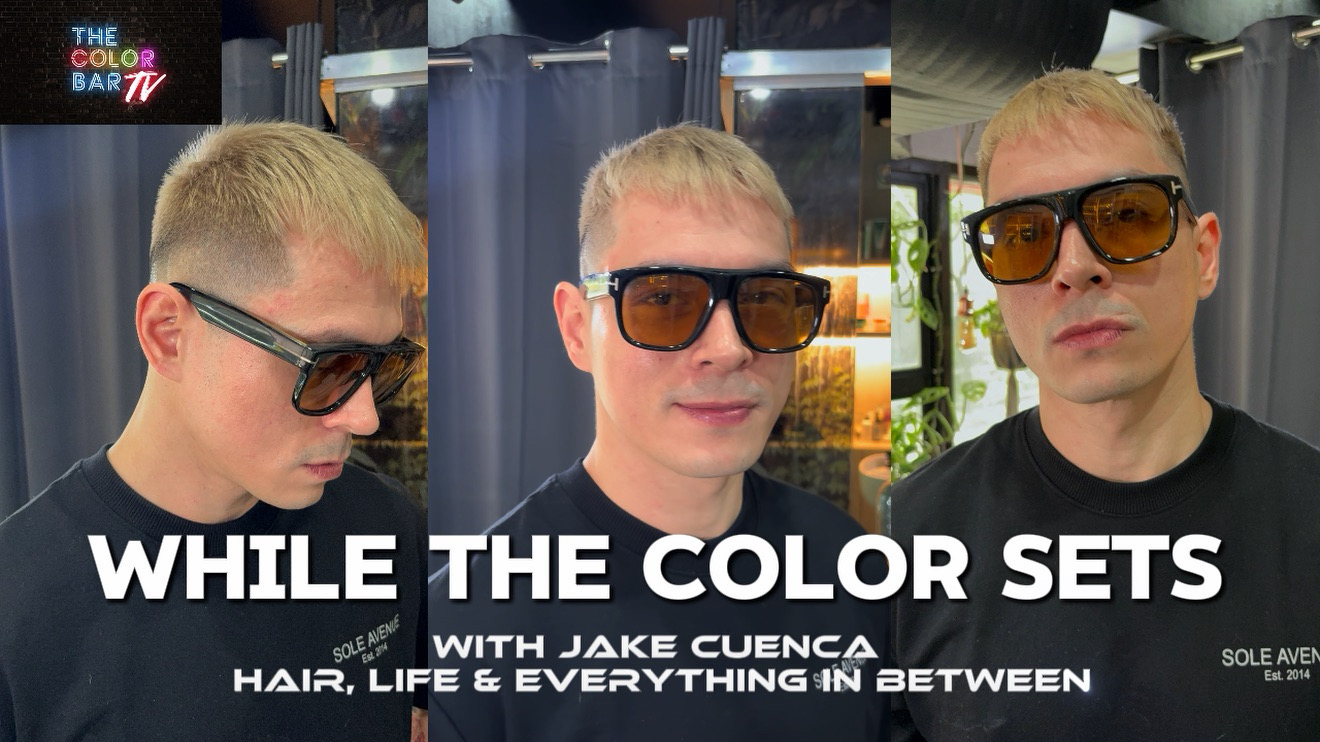
While the Color Sets: Quiet Wisdom from Jake Cuenca
While JOF works on Jake Cuenca’s hair, their conversation moves from color and identity to patience, discipline, and the quiet work behind Jake’s 26-year acting career.

Rainy season brings two things colored hair notices quickly: water and high humidity. Hair fibers absorb moisture from the air, and their outer cuticle layers can swell as humidity rises. When the surface is already more porous from lightening or repeated coloring, moisture may enter unevenly. The result can be frizz, loss of definition, tangles and a finish that looks dull even when the color itself has not suddenly disappeared.
That is why rainy-day color care is really cuticle care. A smoother, well-conditioned surface reflects light more evenly, feels easier to detangle and gives dimensional color a glossier appearance. No routine can make hair completely weatherproof, but a few small habits can reduce unnecessary friction and help your finish recover faster.
Start with dry or nearly dry hair. Apply a lightweight leave-in conditioner or anti-humidity product through the mid-lengths and ends, following the product directions. Think veil, not varnish: enough to improve slip and reduceroughness, but not so much that fine hair becomes flat or oily.
If you plan to blow-dry or heat-style, use a heat protectant and controlled heat. Keep the dryer moving instead of holding it against one area. A cool finishing pass can help the hair feel smoother and set the shape without piling on more heat.

For vivid shades, highlights and lightened ends, pay special attention to the most porous areas. They are usually the first to tangle and the quickest to look fuzzy in damp air.
A sudden downpour often leads to the nearest elastic and the tightest possible ponytail. Resist that reflex when the hair is wet. Wet hair is more extensible, and pulling it tightly can add strain and leave bends or breakage around fragile areas.
Instead, choose a loose braid, a low twist secured with a claw clip, or a soft silk or satin scrunchie. The goal is to control movement without stretching the hair. If your color placement is a feature—such as balayage, face-framing highlights or fashion-color panels—a loose style also prevents harsh creasing while still showing dimension.
Once you are indoors, gently press out excess water with a microfiber towel or a clean, soft cotton shirt. Avoid scrubbing the hair between your hands or roughing it up with a bath towel. Friction can encourage tangling and make a raised cuticle feel rougher.
Detangle only when needed. Use your fingers or a wide-tooth comb, start at the ends and work upward in small sections. Add a small amount of leave-in conditioner if the hair needs more slip. Never force through a knot; loosen it from the bottom instead.
Do not leave the scalp and roots sitting damp for hours after a rainy commute. Gently towel-blot, then use low or moderate airflow until the roots are dry. Keep the dryer moving and leave a little distance between the nozzle and the hair.
You do not need to chase every last drop with high heat. The practical goal is to shorten the time the scalp remains wet, restore the style and avoid aggressive manipulation. If your lengths are only slightly damp, let them finish drying with minimal handling.
When the hair is fully dry, warm one small drop of serum or lightweight oil between your palms and smooth it over the mid-lengths and ends. This can improve shine and reduce the rough, expanded look that humidity creates. Keep oils away from the roots unless your hair texture and product are suited to it.
More product is not always more protection. Heavy layering can attract dirt, flatten movement or leave vibrant color looking coated. Start small; you can always add another half-drop to the ends.
Keep a compact pouch in your work bag or car: a travel-size leave-in or anti-humidity spray, a wide-tooth comb, a soft scrunchie or small claw clip, and a folded microfiber towel. An umbrella protects your blowout, but this little kit helps when the forecast changes faster than your plans.
At home, support the routine with color-care shampoo, a conditioner suited to your hair’s texture and condition, and a weekly treatment recommended by your stylist. Product choice should reflect your specific color service: a vivid fashion shade, blonde highlights, gray coverage and balayage do not always need the same routine.
Do not clamp soaking-wet hair into a tight bun. Do not scrub it dry. Do not repeatedly run a hot iron over damp sections. Do not overload the hair with oil before it is dry. And do not panic-shampoo after every light drizzle; extra washing can be unnecessary unless the hair or scalp is genuinely dirty.
If rainwater has mixed with heavy pollution, floodwater, seawater or pool water, rinse and cleanse appropriately. Floodwater is a hygiene issue, not a styling inconvenience—avoid contact where possible and wash exposed hair and skin promptly.
That is it. No frantic restyling, no heavy cocktail of products and no rough towel work. Consistency protects the look of your color better than one dramatic rescue treatment.
Book a salon check-in if your hair stays rough, tangles unusually fast, snaps easily, or no longer holds its shape after drying. Those signs can point to accumulated porosity or damage that at-home styling products cannot fully disguise. Your colorist can assess the condition, adjust your maintenance plan and recommend the right timing for glossing, toning, treatment or a color refresh.
Rainy weather does not have to mean hiding your color. With a light protective layer, gentler handling and a smart drying routine, your shade can stay expressive, dimensional and glossy—even when the forecast is not.
Does rainwater immediately strip hair color?
A brief shower does not instantly remove permanent color. The bigger day-to-day concerns are repeated wetting, friction, frequent cleansing and how porous the hair already is. Some direct or fashion dyes can release pigment more readily, so follow your colorist’s maintenance advice.
Should I use cold water only?
Comfortably cool or lukewarm water is a practical choice. Very hot water plus vigorous cleansing may feel harsher on sensitized hair, but temperature alone does not mechanically open and close the cuticle like a door.
Is air-drying always gentler?
Not automatically. Air-drying avoids heat, but hair also remains wet and vulnerable to friction for longer. A gentle towel blot and controlled low-to-moderate airflow can be a sensible middle ground.
Can I put serum on wet hair?
Use the product as directed. Some leave-ins and serums are made for damp hair; others perform best as a finishing product on dry hair. Start with a small amount and focus on the lengths and ends.
If your color is looking dull, your ends feel rough or your usual routine no longer works in humid weather, let a Color Bar professional assess your hair and tailor a maintenance plan. Book an appointment with The Color Bar.
This article offers general cosmetic hair-care guidance and is not medical advice. For persistent scalp irritation, pain or unusual hair loss, consult a dermatologist.